
Repetition
Playfully adds oomph and rhythm to prose.

Repetition need not be relegated to the poet’s toolbox. Let me repeat myself. Say it again—artfully and with intention. Here’s how.
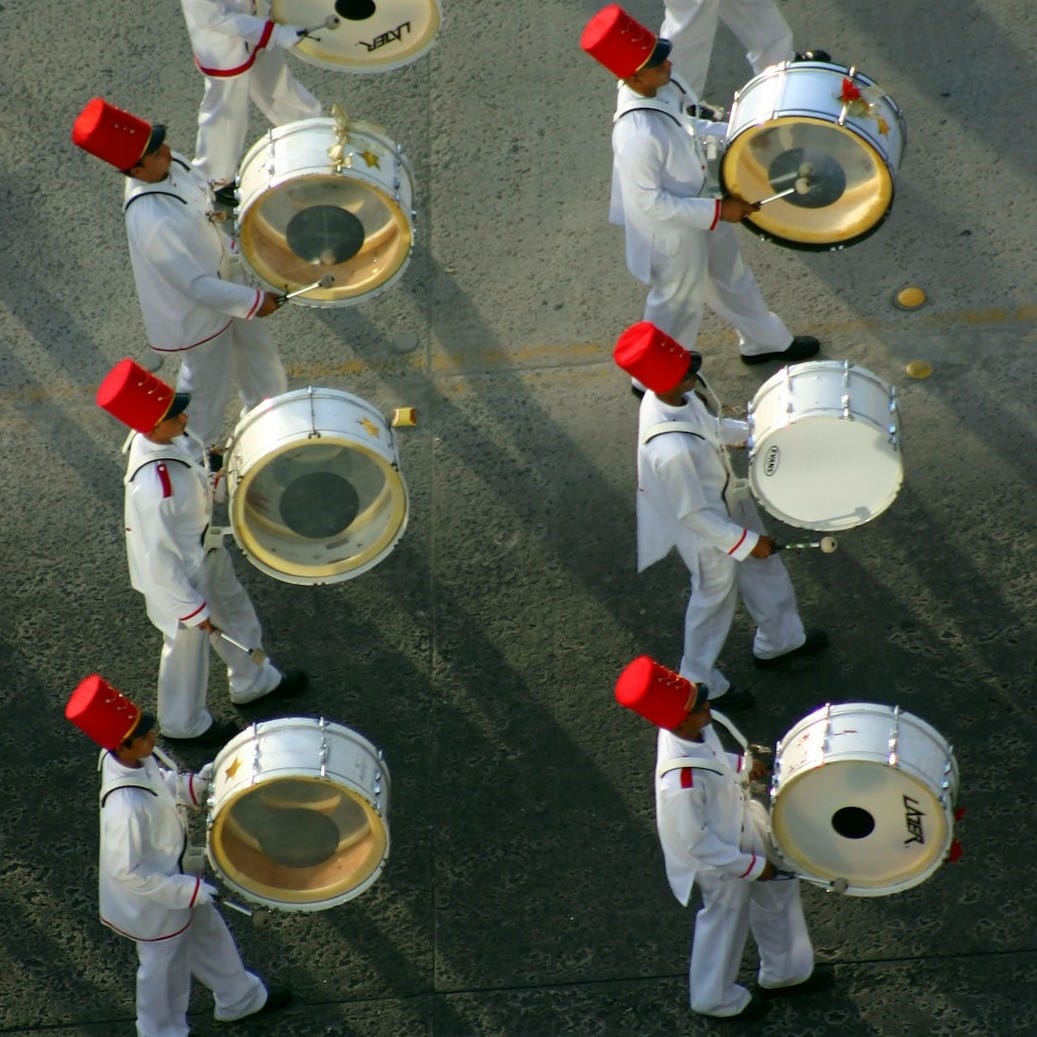
Alliteration is the repetition of the same consonant sound at the beginning of multiple words, such as “Willy Wonky” or “She sells seashells.” Think tongue twisters.
Consonance is the repetition of consonant sounds anywhere in the nearby words. Sometimes these land like near rhymes rather than repetition. Examples are: “He thrusts his fists against the posts” or from Robert Frost’s poem “Fire and Ice” (offered here without line breaks,) “Some say the world will end in fire, some say in ice. From what I’ve tasted of desire I hold with those who favor fire. But if it had to perish twice, I think I know enough of hate to say that for destruction ice is also great and would suffice.” Consider the soft esses, the i’s and the t’s.
Assonance is the repetition of vowel sounds which implies or creates a rhyme. “Mike’s bike has bright white stripes.”
The same word repeated for emphasis, “Out, out, OUT!” is known as Epizeuxis (or simply, repetition.)
Antanaclasis is the repetition of a word or phrase, but with a different meaning each time: “Way out beyond the town limits, Rhoda sat sipping. Time slipped away. She ate what she could reach, moaned, weighed her guilt against desire. Just the way she always did, she’d broken her resolve, lost her way.”
Polyptoton is the repetition of words that derive from the same base word. Here’s Shakespeare using it in Sonnet 116: “Which alters when it alteration finds, / Or bends with the remover to remove” or if that’s too haughty, here’s Dr Seuss: “There are so many things that a thinker can think.”
I recently read Goodlord, a short “novel” written in the form of an angry email. The narrator often starts her paragraphs with a repetition, sometimes with the expression of exasperation, “Goodlord,” which has a second meaning in the narrative. The use of a repeated word or phrase at the beginning of a line or paragraph is known as Anaphora. It’s likely you’ve done this in your own writing but didn’t know that it was a technique.
Epistrophe is the inclusion of a repeated word at the end of a phrase, sentence or paragraph. I’m thinking “quoth the raven Nevermore” is a fine poetic example. Walt Whitman’s Song of Myself has multiple examples, and here’s one quatrain: “There was never any more inception than there is now / Nor any more youth or age than there is now, / And will never be any more perfection than there is now, / Nor any more heaven or hell than there is now.”
If you are a daredevil and want to really challenge yourself, try employing Epanalepsis or Symploce. In both, words or phrases are repeated at both the beginning and the end of a sentence or paragraph.
Epanalepsis uses the same word or phrase at both the beginning and end of one clause or sentence. This “frames” the clause or sentence and the repeated word is emphasized: “Beloved, it is beloved.” And “Next time there won’t be a next time.”
Symploce interweaves the same starting word or phrase (A) and the same ending word or phrase (B) by repeating them over a sequence of multiple sentences, paragraphs or stanzas. This creates a memorable rhythm and reinforces key ideas and emphasis. Because this repetition occurs over several successive phrases or paragraphs I haven’t included an example. But think back to powerful speeches, poems, songs where each idea begins and ends on the same note. Chances are, symploce was being utilized.
Of course you could gamify the entire exercise and use Anadiplosis in your text. In that case the final word of a line will begin the next, creating a linked-chain-effect. “In A River Runs Through It (by N McLean): “… all good things—trout as well as eternal salvation—come by grace and grace comes by art and art does not come easy.” Or W B Yeats poem, An Irish Airman Foresees His Death: “The years to come seemed waste of breath, / A waste of breath the years behind.”
The next time you are writing a newsy text to your bestie, or a speech you need to give, or an essay for a newsletter, or a poem to express inexpressible feelings, or that novel you’ve begun, try repetition. In the often repeated words of my former mandolin teacher, “if it sounds nice, play it twice.”
My teacher, mentor. Thank you.
Thanks for these thoughts, there are so many niceties to play with in the English language :)